Whether it's yours comes down to a handful of decisions nobody walks you through - starting with one number that almost everyone gets wrong, for reasons that sound right. This is the guide that gets it right, before you spend fifteen thousand dollars finding out the hard way.
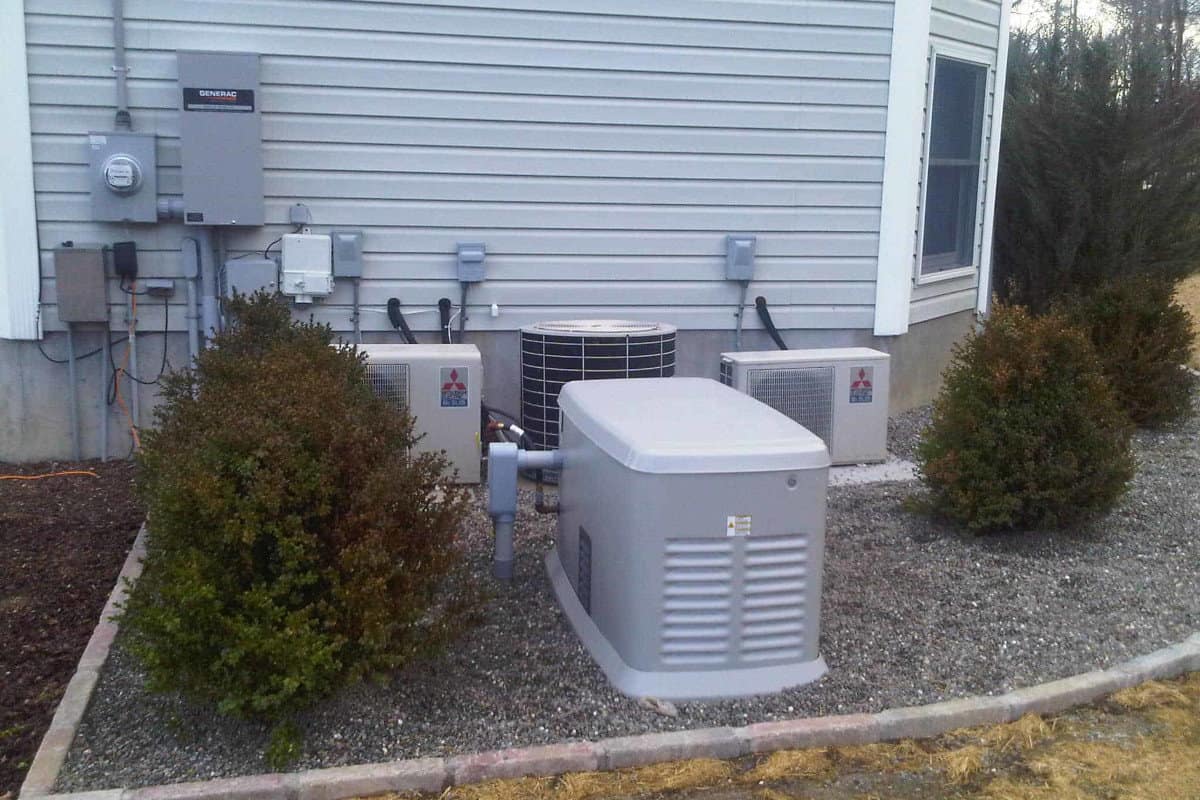
Current-generation air-cooled home standby
Here's a story that plays out on some Florida street every hurricane season.
A guy buys a standby generator and does everything the responsible way - a name brand, a professional install, the whole nine yards. Then the first real outage hits. His neighbor's unit fires right up. His? He's outside in the weather, trying to coax it to life while the fridge warms up and the house goes quiet.
"After four years they told him it was too costly to repair - cheaper to buy another unit. He uses a portable now."
a homeowner watching it happen to his neighbor
That's the fear this whole category runs on: you pay for peace of mind, and the one time you actually need it, you get nothing. It almost never comes down to bad luck. It comes down to things nobody told the buyer before they signed - the size, the part that really fails, the warranty that isn't what it says, and whether anyone will show up.
None of that is complicated once someone shows you. So let's go through it, the way a good installer would at your kitchen table - no sales pitch, just the stuff that decides whether you're the lit house.
Start with the one that trips up almost everybody: how big a generator you actually need.
Two real homes. Same phrase on the quote - "whole home generator." Completely different machines.
A 5,000-square-foot Florida home runs flawlessly on a 24kW. It's at sea level on propane - cooktop, oven, dryer, water heater, even the pool heater all run on gas. The A/C is inverter-driven and efficient. It's just a couple living there. To a generator, that big house is light work. The 24kW coasts.
A 2,700-square-foot mountain home chokes a 26kW. Smaller house - but it's all-electric inside (induction cooktop, electric oven, electric dryer, a 50-amp EV charger), the generator runs on natural gas at 4,000 feet, and the house is fully lived in: kids, laundry, hot meals. Twice the electrical load, in far less square footage.
Sizing is not about square footage. It's about load - how much power your house actually pulls, on your fuel, with your appliances, the way you actually live. Which is exactly why your neighbor's generator tells you nothing about yours.
And it gets stranger - because the number printed on the box isn't the number you actually get.
The number on the box is a best-case lab rating. Two penalties quietly eat it before a single appliance turns on.
Fuel type. Most generators make less power on natural gas than propane - a 26kW can drop to about 22.5kW the second it runs on NG. That's roughly 13% gone, and it hits nearly every Florida home on a gas meter.
Elevation. Up in the mountains you lose more - generators drop about 3.5% per 1,000 ft. Stack that on the fuel cut and that home's "26kW" was really pushing about 19.4kW - around 80 usable amps, down from over 100. Same label, completely different machine. (Good news for us: Florida is at sea level, so this one doesn't hit you.)
Here in Florida you skip the elevation hit - we're at sea level. But if your generator runs on natural gas, that first cut still comes off the top. So when someone quotes you "a 26," the honest question is: 26 of what - on my fuel, at my elevation?
What a "26kW" really delivers - gas takes the first cut on every Florida home; elevation only bites in the mountains
So your real number is smaller than the box says. And your life is bigger than you think.
Modern homes hide enormous loads inside ordinary-looking appliances. A single one can swallow a whole generator.
We've seen a single on-demand electric water heater with four 40-amp breakers pull 36kW - more than an entire 22.5kW generator can make, just for hot water. A Tesla wall charger pulls up to 48–80 amps depending on the model; a Hummer EV or some Porsches, closer to 100. These aren't side loads. They're primary systems.
The online calculator doesn't know you charge the EV overnight, or run two dryers on weekends, or that the oven's at 400° while the A/C kicks on. Real usage isn't generic - it's personal. So the sizing has to be too.
How fast a real 22.5kW - that "26kW" after the gas cut - fills up with everyday loads
And none of that even counts the single worst half-second your generator has to survive.
The number that trips people up isn't running load - it's starting load. When a motor kicks on, it pulls far more than it does while running.
Running load vs. the startup spike - where undersized units trip
We don't size for the average - we size for the worst moment, when the A/C, the pool pump and the well pump all surge at once. If the generator can't carry that spike, things shut down or trip out. Anything less is a gamble, and a storm isn't the time to roll the dice.
Get all of that right, and there's still one thing left that no sizing chart protects you from: the machine failing itself.
Your standby runs a self-test once a week. You hear it hum for a few minutes on Thursday and you feel safe. Here's the problem with that feeling.
Why a weekly self-test can hide a failure until the exact moment you need power
The weekly exercise cycle spins the engine - but it never makes the alternator carry your house. So the one part that has to work hardest during an outage is the one part the test never checks. A unit with a worn or defective alternator can pass every Thursday for years and still make zero power the night the grid drops.
This isn't hypothetical. A 2024 federal class action alleges a slip-ring / carbon-brush alternator defect in certain 22kW and 24kW air-cooled units sold 2021–2024 - a defect that, as alleged, lets a generator pass its self-test and then fail to deliver power under real load. It's an allegation, not a verdict. But the mechanism is exactly why a good installer never trusts a weekly hum as proof of anything.
"When was this unit last tested under real household load - not just its weekly exercise cycle?" A generator that has only ever run unloaded has never truly been tested at all.
That alternator flaw is one way a standby dies. The part that strands the most people is a different one - and it's not the engine everyone argues about either.
Buyers argue about whose engine is "commercial grade." Meanwhile, the part that actually strands people is the little computer that tells the generator when to run.
Beyond that alternator defect, the part that kills the most units day to day is smaller and cheaper-sounding. Across hundreds of owner reports the engine rarely ends a standby's life - the control board does, on both major brands, and it's a $1,000-plus part when it goes.
"It has never worked. It's had new boards put in four times."
owner of a 48kW unit bought for a health-dependent household
It's not just one brand. A factory tech, at a seminar, said the quiet part out loud about the other:
"The first and second series of these boards have known flaws, and are prone to failure. Replacement boards? North of $1,000. Ouch."
a factory tech, on a competing brand's controller
So when you're comparing units, the smart question isn't "whose engine is tougher?" It's "what does the control board cost, and how fast can you get me one?"
"But it's under warranty," you're thinking. That's the next thing worth reading the fine print on.
A five-year warranty sounds like five years of protection. Read how it's actually structured and the number quietly shrinks.
On many standby units the coverage is parts, labor and travel only in years one and two - then parts-only in years three through five. The part might be free. The several hundred dollars of labor to install it is on you.
"For this repair it would cover parts only - twenty-five dollars. All the rest is labor. I got it fixed for $650."
a standby owner, on a year-five "covered" repair
None of this means a warranty is worthless - it means "5 years" is marketing, and the real coverage is in the terms. Before you sign, get it in writing, year by year: what's covered, parts and labor and travel, and for how long. If a salesperson won't put that on paper, that tells you what year-five service will feel like.
If the badge on the box won't save you, then the brand you pick matters less than you've been led to believe. Here's the part nobody selling you a generator will say.
Go read the comments under any generator video and you'll notice a pattern the sellers hope you don't.
Every "mine's been bulletproof for years" story turns out to be about a unit that's 15, 18, 21 years old. People say it themselves:
"Everyone that says their generator has zero problems is talking about the old ones. I'd pay more for your 21-year-old unit than for a brand new one today."
a commenter, on the age pattern
Two things stacked on top of that. Brand loyalty built on decades-old hardware doesn't transfer to what's in the crate today. And the same "22kW" from the same brand can be two physically different machines - an older chassis and a 2025-refreshed platform sold side by side at different prices. Shoppers comparing "the 22kW" across two retailers are often comparing two different products.
There's also real anxiety about ownership changes - one major brand's generator division was sold to a private-equity firm in 2024 and rebranded (the generators are still made under the same name). Owners feel it:
"Buy what they use, not what they sell. Drive behind a Home Depot and look at what's running the building."
an installer's rule of thumb
Nobody regrets owning backup power. What people regret is this unit, this size, this dealer. The regret is almost never the badge - it's the fit and the service behind it.
There is one place the spec sheet genuinely decides things: how big you can go before the price roughly doubles.
Almost every home standby is one of two kinds of machine. Knowing which you need - and where the line is - saves you from over- or under-buying.

Air-cooled units run fast and cool themselves with a fan - the "appliance" of backup power, and the right call for most homes, from about 10 to 28kW. Liquid-cooled units run slower, with a radiator and coolant like a car - built for the biggest loads, and they cost roughly double.
The line between them sits around 26–28kW. If your measured load lands under it, you stay in air-cooled and save thousands. If it pushes past, you step up to liquid-cooled - which is exactly why getting your real number matters before anyone quotes you a machine.
Two different machines: the appliance vs. the engine
THE CEILING OF AIR-COOLED
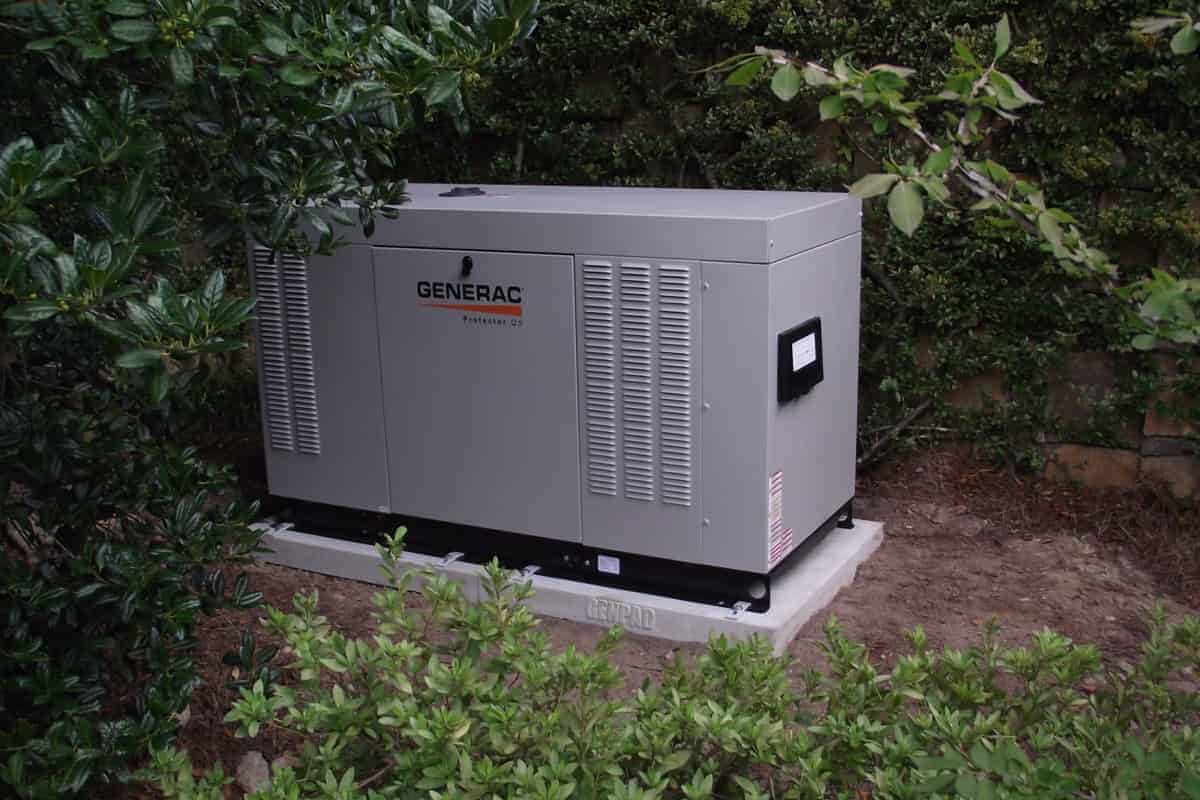
When your real load pushes the top of the air-cooled range, this is where it ends - 28kW (28kW on propane, 25kW on natural gas - figures vary by model), the most powerful air-cooled home standby made. It runs the current platform - new engine, electronic fuel control, built-in cellular monitoring - in the same small footprint. If a load calculation lands you here, it's worth knowing this is the ceiling before the price jumps to liquid-cooled.
Big or small, there's only one way to land on the right number - and it isn't a calculator.
A real sizing isn't a form and an online estimate. It's a site visit and actual numbers - because the outage is the worst possible time to learn the generator isn't enough.

Distance matters more than people expect. Put the generator 200 feet out by a detached garage and it's like a speaker 200 feet from the stereo - same setting, weaker signal. Voltage drops, and the power reaching your panel isn't as strong right when you need it most.
When the grid drops, the generator takes 10–20 seconds to start and the transfer switch to hand over. Everything blinks - clocks, computers, anything sensitive. If you run medical equipment or a home office, ask about a small battery backup (a UPS) to bridge that gap. It's the kind of detail that only comes up when someone's actually been in your situation.
We don't assume. We verify - because when the lights go out, every quirk in your electrical system suddenly becomes very real.
And here's why getting it right the first time matters more than with almost anything else you buy for your house.
Buying one is a lot like buying a truck. You tell yourself you don't need the bigger engine. You justify the smaller payment. "It'll be fine." Then you hook up the trailer - and feel the regret instantly.
Here's the difference: a truck, you can trade in. A generator, once it's installed, is permanent. Going bigger later means ripping out electrical, gas lines, and the concrete pad - the whole job, again. Whatever you saved by undersizing disappears the day you find out you undersized.
You wouldn't buy your neighbor's shoes because they were on sale. Don't buy their generator either. Get the one that fits your house.
Which brings us back to that dark street - and the one thing all of this was really about.
Be honest - this was never really about kilowatts. It's about your home feeling normal when the world outside isn't.
You cook. You shower. The kids do homework. You charge the car. During an outage, without even thinking about it - no juggling loads, no appliance Tetris, just your life, fully powered.
Because here's what happens the first time the power actually goes out: it stops being a spreadsheet. It gets real, and it gets emotional. And the homeowner doesn't remember the three options or the money they saved. They remember one thing - "this is the generator you sold me."
That's why we size for how you actually live. Nobody should be told, mid-storm, "you should've gotten the bigger one."
Drop your email and we'll send you this entire guide as a clean, printable PDF - the sizing math, the questions to ask, all of it - so it's in your inbox the day you sit down with a salesperson. No cost, no catch.
You're holding the PDF. For the live version - and a free sizing worked out for your exact home - visit generasic.com.
We'll send it right now. That's the only thing this does.