Drive southwest out of Orlando toward the theme parks and you pass a stretch of Sand Lake Road that locals just call Restaurant Row — valet stands, steakhouses, a glossy sprawl of gated golf neighborhoods behind it. The whole district is named Dr. Phillips. There was a real doctor. He almost never practiced medicine. What he practiced was oranges — and the reason a luxury suburb carries his name is that he spent sixty years making sure one cold night could never wipe him out.
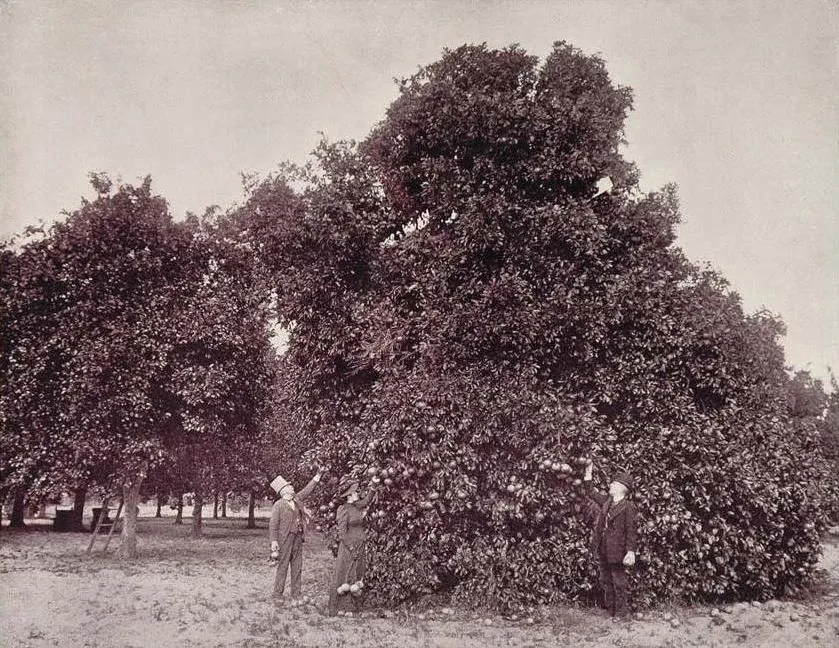
The grove that died in a night
Philip Phillips came to Florida in 1894, twenty years old, fresh from a medical degree at Columbia and carrying five thousand dollars from his father. He did what thousands of hopeful men did that decade: he bought an orange grove — his was at Satsuma, up near Palatka about ninety miles north of Orlando — and waited to get rich on fruit.
He had perhaps a year.

In December 1894 a freeze swept the state and knocked the citrus back. Then came a stretch of warm weather that coaxed tender new growth out of the trees, and in February 1895 a second freeze — temperatures falling some sixty degrees in a single day — killed that growth to the wood. Across Central Florida, growers who had bet everything on oranges were simply ruined; one county reported more than twenty thousand acres of citrus and not a single box of fruit. Phillips’s trees were among the dead. He gave up and went back to Tennessee.
Most men’s stories end at the freeze. His started there.
Never one grove again
When Phillips came back to Florida, he came back with a different idea about risk. He didn’t buy one big grove in one promising spot. He bought parcels — small ones at first, scattered mostly through Osceola County — and he kept buying, and he kept spreading them out. By 1920 the Dr. P. Phillips Company held more than five thousand acres of citrus, and those acres were scattered across nine different Florida counties.

That scattering was the point. A freeze is a local thing; it settles into low ground and valleys and spares a ridge a few miles away. A grower with everything in one field loses everything in one night. A grower with groves in nine counties loses a corner and keeps the rest. Phillips had learned that the hard way at Satsuma, and he never unlearned it. He had turned his business into something a single cold snap couldn’t kill.
He had lost everything to one cold night once. He spent the next fifty years making sure a single anything could never do it again.
The other way fruit dies

But a scattered empire of groves created a second problem, almost the opposite of frost. When the trees all came in at once, you had mountains of ripe oranges and only a few weeks to sell them before they rotted. Refrigeration barely existed. A good year could glut the market and crush the price; a shipping delay could turn a fortune into garbage on a rail siding. Fresh fruit is, by its nature, a thing on a clock.

Phillips went after that clock the same way he went after the freeze — by refusing to depend on it.
The orange that kept
In 1928 he built his own juice plant, and his people set to work on a problem everybody in citrus had: canned orange juice tasted like the can. Heat it enough to keep and you cooked the flavor out and left a tinny, metallic taste behind. What the company developed, around 1929, was a process it called flash pasteurization — heating the juice hot and fast, for a very short time, so it was safe and shelf-stable without being stewed. By 1931 the cannery was turning out twenty-four thousand cans a day.

That was the real breakthrough, bigger than any single grove. Phillips had taken the most perishable thing he grew and made a version of it that wouldn’t spoil — juice that could sit on a shelf for months and still taste like Florida. Now a bumper crop wasn’t a glut to dump cheap; it was juice to can and sell all year. He sold roughly a hundred million oranges a year off his groves, became the first grower to sell oranges by the pound rather than the bushel, and plastered the label with his own title: “Drink Dr. Phillips orange juice, because the Doc says it’s good for you.” The line was cheeky enough that the American Medical Association’s food council actually put its seal on his cans.
He hedged the fruit itself, too. Phillips was the first citrus man in Florida to dust his groves from an airplane, treating thousands of scattered acres for pests and disease faster than any crew on the ground ever could. The private airstrip he flew those planes from is a gated subdivision now, called Phillips Landing.
A town grows in the off-season
All those scattered groves needed hands, and hands needed work in the months when nothing was ripe. So in the 1920s Phillips started building things that ran year-round on the one patch of land near Sand Lake that was no good for citrus anyway. A packing house went up there in 1928. Then worker housing, then a post office beside the railroad stop — and that cluster of buildings, built mostly to keep his seasonal pickers employed through the summer, is the seed the modern community grew from. It took his name. It still has it.
What the freeze left standing

Phillips sold the whole citrus business in 1954 — groves, packing houses, the juice plant — to a partnership that folded it into Minute Maid. He died in 1959. The scattered groves that outlasted every freeze did not, in the end, outlast Orlando: over the decades the trees came down and the subdivisions and the restaurants went up on top of them, until almost nothing green of the original empire was left.

But look at what survived anyway. His own house still stands, restored and on the National Register. His name is on the performing-arts center downtown, on a hospital, on the sign over Restaurant Row. The man spent his life making sure he always had a fallback — a grove in the next county, a can that kept when the fresh fruit couldn’t — and the fallbacks are exactly what’s still here. The oranges are gone. The habit of never betting everything on one thing is the part of Dr. Phillips that never froze out.


